
The Limelight collection
Knobloch’s Mountain Kingsnake
Lampropeltis knoblochi
Chihuahuan mountain kingsnake · Tarahumara mountain kingsnake
Clean red, black and white patterning with mountain-kingsnake character. Our Megaband bloodline adds another distinctive expression to this species.
Browse available animals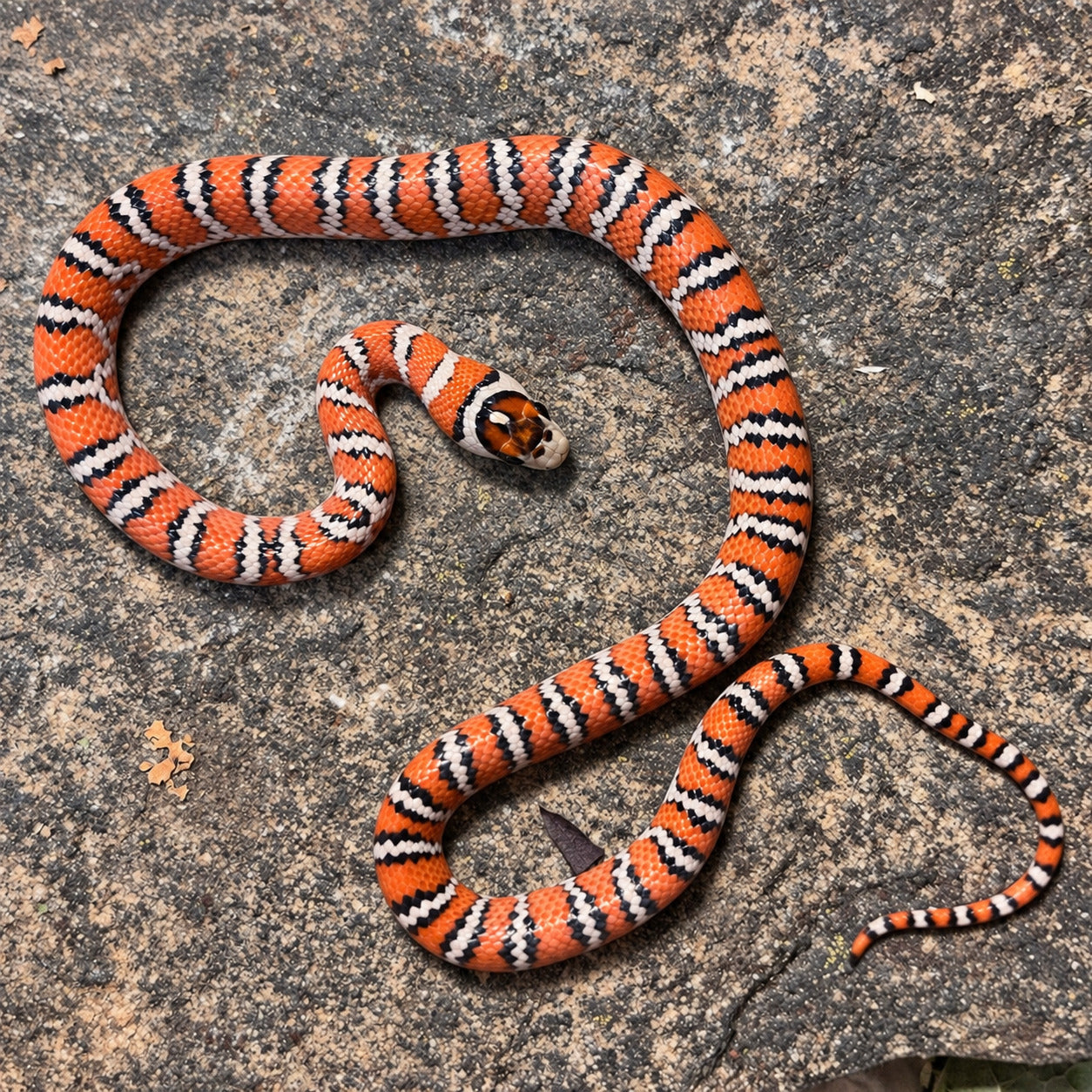
- Adult size
- A medium-sized mountain kingsnake; ask for the line’s adult size
- Origin
- Chihuahua, Sonora and southeastern Arizona
- Housing
- One snake per enclosure
Beyond the pattern
In the wild. In your collection.
The Reptile Database lists this species in Chihuahua and Sonora, Mexico, and southeastern Arizona. Formerly included within L. pyromelana, it is now treated as a separate species in the taxonomy used by iNaturalist.
Band proportions and pattern can differ among lines. “Megaband” is a bloodline description, not a separate species. Breeder documentation is the best way to understand an animal’s ancestry and expected expression.
From the Kingsnake.com archive
Kingsnake.com includes Knobloch’s under the older name Lampropeltis pyromelana knoblochi, calling it the Tarahumara mountain kingsnake. That page has several unfinished fields, so the current distribution and name here are checked against the Reptile Database and iNaturalist.
Read the historical species profile ↗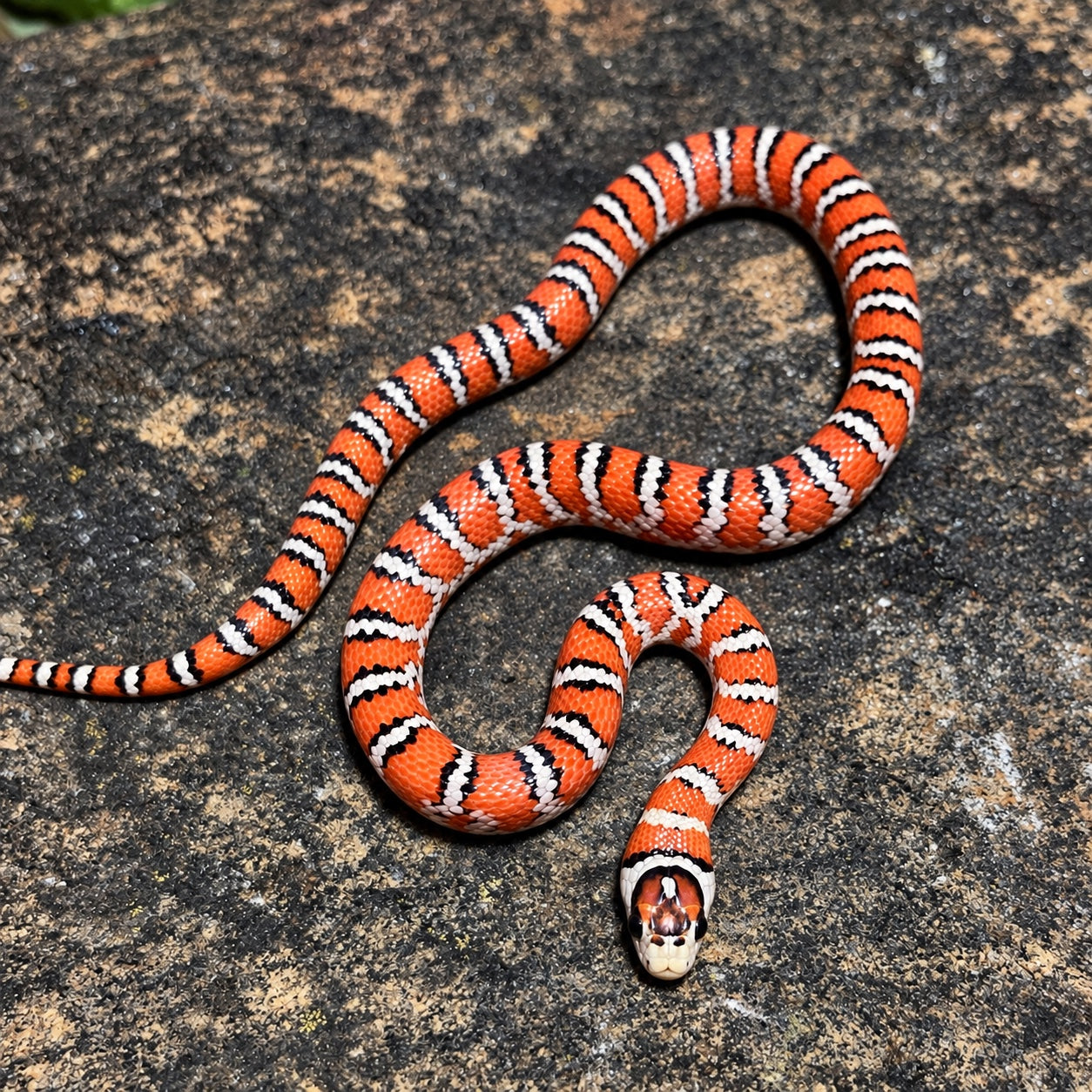
Practical husbandry
A care sheet to keep close.
Set up and measure the enclosure before your snake comes home. These starting ranges are for routine maintenance; follow the individual animal’s breeder guidance and monitor its condition.
- Warm area
- 26–28°C (79–82°F) as a starting warm area
- Cool retreat
- 21–24°C (70–75°F)
- Humidity
- Moderate ambient humidity plus a moist retreat
Housing
House singly. Use a secure enclosure long enough for the adult to stretch out, with room to explore and climb. Scale up as it grows.
Cover & substrate
Provide snug warm and cool hides, stable branches and burrowing substrate. Avoid aromatic cedar or pine bedding.
Heating
Control every heater with a thermostat. Measure both ends with digital thermometers; guard bulbs and avoid heat rocks.
Water & shedding
Provide clean water and a humid hide with moist, not saturated, material. Maintain ventilation and keep most substrate dry.
Feeding
Offer appropriately sized frozen/thawed rodents. Follow the animal’s established schedule; adjust with growth and body condition.
Handling
Let a new animal settle and feed reliably. Support its body gently and leave it undisturbed for 48 hours after meals.
Routine
Spot-clean waste promptly. Record meals, sheds and weight. Persistent feeding refusal, weight loss or breathing changes need a reptile veterinarian.
Light & season
Provide a consistent day/night cycle and shaded retreats. If using UVB, match output and distance to the animal. Brumation is not required for a pet.
Field observations
Where people have recorded them.
Explore public, research-grade, wild observations on iNaturalist. Coloured cells show recorded sightings—not a complete range boundary or a measure of abundance.
Loading observation map… Open the iNaturalist map ↗
A common question.
Is Megaband a different species?+
No. It describes a captive bloodline within Knobloch’s mountain kingsnakes. Its documentation belongs with the individual animal.
Read further
Sources & context.
- Kingsnake.com — historical species profile
- Petra Spiess — Captive Care of Kingsnakes and Milksnakes
- RSPCA — enclosure, environmental control and care
- iNaturalist — Lampropeltis knoblochi
- The Reptile Database — nomenclature and distribution
Reviewed 13 October 2026. Historical keeper accounts are paraphrased and linked; older scientific names are retained only as context. Photos are from the Limelight collection. Observation tiles are supplied live by iNaturalist; basemap © OpenStreetMap contributors.
Find your next animal.
Ask us about availability, feeding history and the individual snake that catches your eye.
Available animals Contact Limelight