
The Limelight collection
Honduran Milksnake
Lampropeltis abnorma
Honduran milk snake · Hondurensis
Bold-bodied, brightly banded and full of possibility. Classic, Tangerine, Albino, Anery and Snow animals bring very different palettes to the same collection.
Browse available animals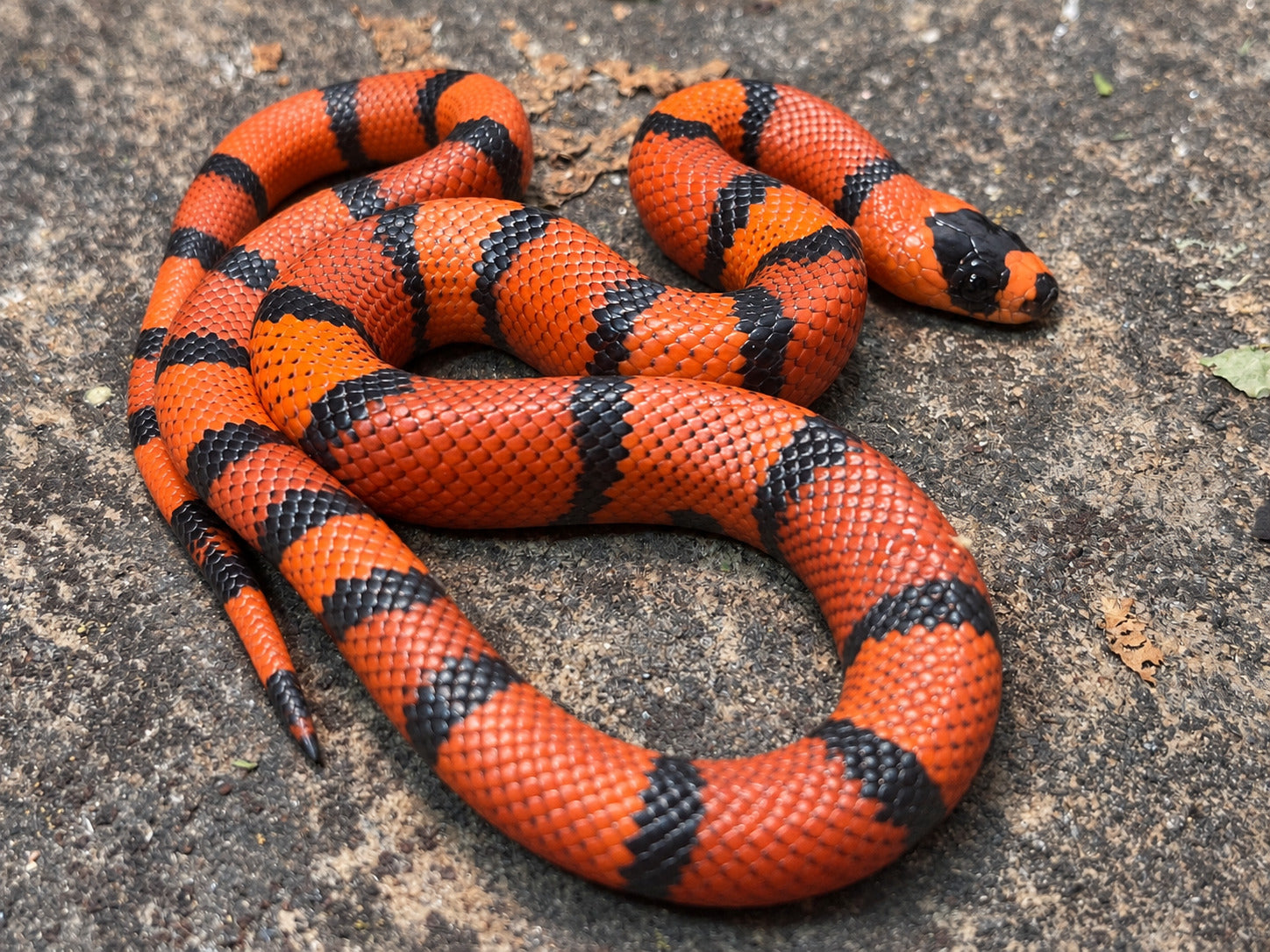
- Adult size
- Often about 100–150 cm; some grow larger
- Origin
- Honduran form: Honduras, Nicaragua and nearby Central America
- Housing
- One snake per enclosure
Beyond the pattern
In the wild. In your collection.
The older hondurensis account associates this form with low-to-middle elevation tropical environments in Honduras, Nicaragua and northeastern Costa Rica. The wider species group mapped here extends beyond that traditional captive form.
A Honduran’s adult size deserves planning from the start. These snakes can have an enthusiastic feeding response, so distinguish a feeding cue from handling. Albino and Anery are separate traits; Snow combines them. Possible hets remain unconfirmed carriers.
From the Kingsnake.com archive
Kingsnake.com describes both classic tricolour and Tangerine forms and discusses captive-bred Albino and Anery animals. Its historical geographic account is useful context, while current names and broader species limits are handled separately here.
Read the historical species profile ↗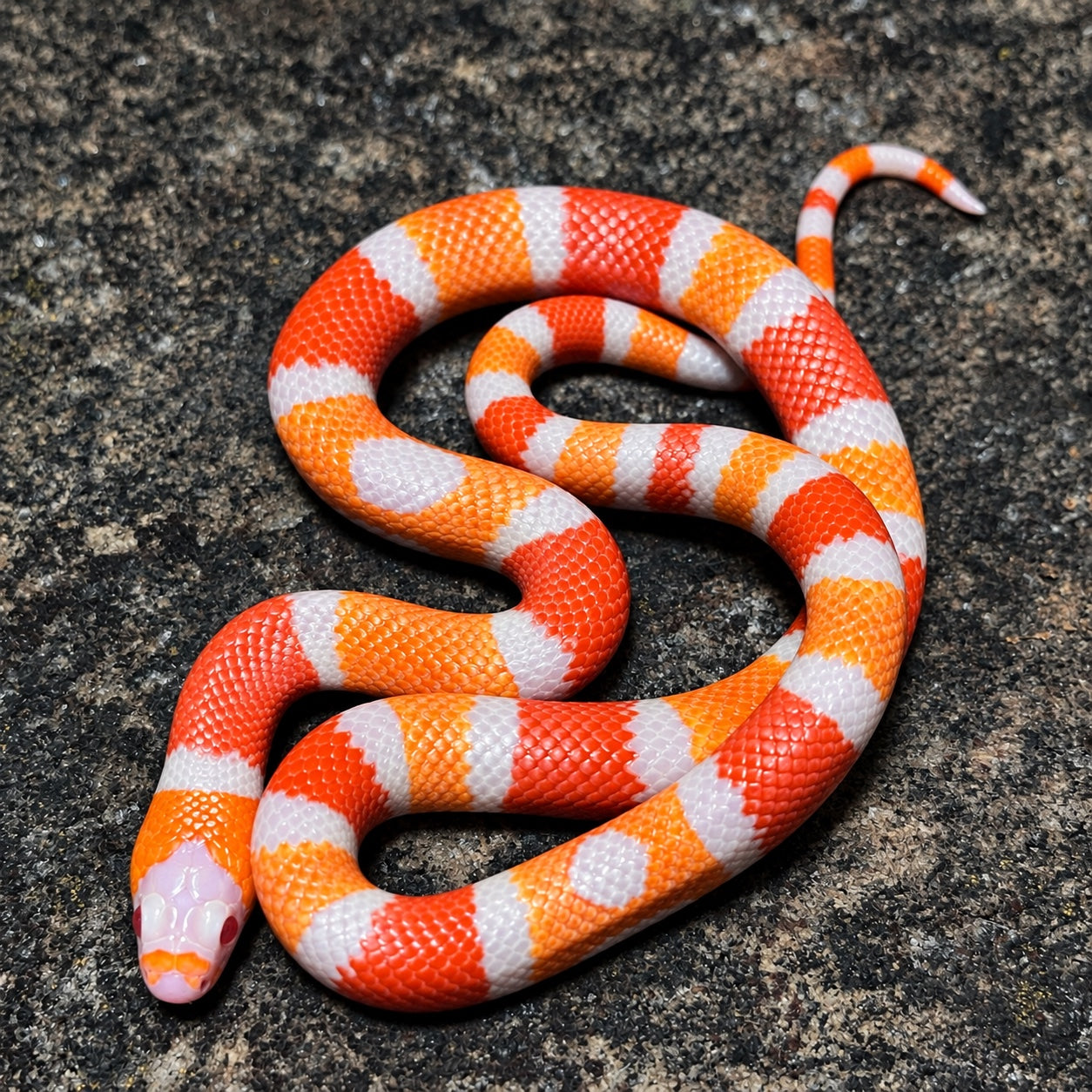
Practical husbandry
A care sheet to keep close.
Set up and measure the enclosure before your snake comes home. These starting ranges are for routine maintenance; follow the individual animal’s breeder guidance and monitor its condition.
- Warm area
- 26–30°C (79–86°F)
- Cool retreat
- 21–24°C (70–75°F)
- Humidity
- About 40–60%, with a humid hide; check shed quality
Housing
House singly. Use a secure enclosure long enough for the adult to stretch out, with room to explore and climb. Scale up as it grows.
Cover & substrate
Provide snug warm and cool hides, stable branches and burrowing substrate. Avoid aromatic cedar or pine bedding.
Heating
Control every heater with a thermostat. Measure both ends with digital thermometers; guard bulbs and avoid heat rocks.
Water & shedding
Provide clean water and a humid hide with moist, not saturated, material. Maintain ventilation and keep most substrate dry.
Feeding
Offer appropriately sized frozen/thawed rodents. Follow the animal’s established schedule; adjust with growth and body condition.
Handling
Let a new animal settle and feed reliably. Support its body gently and leave it undisturbed for 48 hours after meals.
Routine
Spot-clean waste promptly. Record meals, sheds and weight. Persistent feeding refusal, weight loss or breathing changes need a reptile veterinarian.
Light & season
Provide a consistent day/night cycle and shaded retreats. If using UVB, match output and distance to the animal. Brumation is not required for a pet.
Field observations
Where people have recorded them.
Explore public, research-grade, wild observations on iNaturalist. Coloured cells show recorded sightings—not a complete range boundary or a measure of abundance.
Loading observation map… Open the iNaturalist map ↗
A common question.
Are possible hets guaranteed to carry a gene?+
No. A percentage is a probability based on a documented pairing. It is not the same as a proven or 100% het animal.
Read further
Sources & context.
- Kingsnake.com — historical species profile
- Petra Spiess — Captive Care of Kingsnakes and Milksnakes
- RSPCA — enclosure, environmental control and care
- iNaturalist — Lampropeltis abnorma
- The Reptile Database — nomenclature and distribution
Reviewed 13 October 2026. Historical keeper accounts are paraphrased and linked; older scientific names are retained only as context. Photos are from the Limelight collection. Observation tiles are supplied live by iNaturalist; basemap © OpenStreetMap contributors.
Find your next animal.
Ask us about availability, feeding history and the individual snake that catches your eye.
Available animals Contact Limelight